

How to Import Wire Mesh Fencing from China: The 2026 Manufacturer’s Guide
- Updated: February 26, 2026
- Post Views: 89
- By: Shengsen Metal
The Quick Answer
-
Select the Right System: Choose 358 Anti-Climb for high security (prisons/data centers) or 3D V-Mesh for cost-effective industrial boundaries.
-
Lock Technical Specs: Explicitly require Q235 Structural Steel (avoid soft Q195) and set a strict ±0.05mm wire tolerance in your contract to ensure you don’t receive underweight panels.
-
Vet the Manufacturer: Bypass traders by demanding a live video audit of the factory’s wire drawing and galvanizing lines—if they can’t show the raw machinery, they are outsourcing.
-
Optimize Logistics: Always ship Full Container Loads (FCL) to lower your cost-per-meter and verify HS Code 7314 duties for your specific country before paying the deposit.
Introduction
Importing wire mesh fencing is the most effective way to protect your project margins, but only if you control the technical details. Most buyers fail because they focus on the “Catalogue Price” rather than the Landed Cost and Service Life.
If you don’t define your specs, the factory will define them for you—often to their advantage.
This guide is your technical blueprint. We aren’t just telling you what to buy; we are explaining the hidden mechanics of the Chinese wire mesh industry. From the metallurgy of the steel to the chemistry of the coating, here is how to source wire mesh fencing from Shengsen Wire Mesh with total confidence.
Is Importing Wire Mesh Profitable in 2026?
The short answer is yes, but the margins are found in the details. The global demand for security infrastructure is rising, driving up the cost of raw steel and labor locally.
By contrast, China’s matured industrial base offers a stabilization of costs that domestic wholesalers simply cannot match. However, profitability isn’t automatic. It requires navigating a landscape of potential pitfalls, from fluctuating ocean freight rates to the subtle technical differences that separate a 20-year fence from one that rusts in six months.
To understand the real value proposition, we have to look beyond the catalog price. You have to consider the “Total Landed Cost”—the final price you pay once the goods are delivered to your warehouse or job site.
When managed correctly, this number should still be significantly lower than your local options, but getting there requires understanding where the savings actually come from.
The 30% Savings Rule: Factory Direct vs. Local Wholesalers
Why is there such a massive price gap between a local supplier and a Chinese manufacturer? It comes down to the supply chain layers. When you buy from a local wholesaler, you are paying for their convenience, yes, but you are also funding their immense warehousing overhead, their sales staff commissions, and the risk buffer they add to cover tariff fluctuations.
By going factory-direct, you effectively strip out these layers. You become the importer of record. While this assumes the responsibility of quality control and logistics, the financial reward is substantial. In our analysis of standard B2B volume orders—typically exceeding 500 linear meters of fencing—importers consistently realize a net saving of 30% or more.
This margin exists because you are utilizing the factory’s economies of scale directly. You aren’t paying for a middleman to hold stock; you are paying for steel, fabrication, and freight. For large-scale perimeter projects, this 30% difference is often the deciding factor in winning a competitive bid.
Cost Calculator: Estimating Landed Price for a 40HQ Container
One of the most common mistakes new importers make is fixating on the FOB (Free on Board) price. The FOB price is merely the cost of the fence sitting on the dock in China. It does not account for the journey that follows. To determine if a deal is truly profitable, you must build a “Landed Cost Model.”
Fencing is a unique cargo because it is heavy yet voluminous. You aren’t just shipping steel; you are shipping “air” between the mesh gaps and the curves of the panels. Therefore, ocean freight becomes a massive component of your unit cost. A profitable model includes the product value, the ocean freight (always calculated for a Full Container Load, or FCL), insurance, and the Destination Terminal Handling Charges (DTHC).
Furthermore, you must account for duties. Tariffs on steel products vary wildly by country—from anti-dumping duties in the US and EU to preferential trade agreements in other regions. A quote that looks cheap at the factory gate can double in price if you haven’t researched your specific Harmonized System (HS) code duties.
A professional buyer calculates the cost per installed meter—accounting for the panel, the post, the clamps, and the freight for all three—rather than just comparing the price of a single mesh panel.
Buyer Alert: Avoiding the “Steel Grade” Trap (Q195 vs. Q235)
Before we even discuss mesh designs, we have to talk about the DNA of the fence: the steel itself. This is the most common area where budget suppliers cut corners to offer a lower price, and it is almost impossible to detect with the naked eye.

Chinese steel wire is generally categorized into grades, with Q195 and Q235 being the most relevant for fencing. Q195 is a low-carbon steel. It is softer, more ductile, and easier for the factory to draw and weld. It is also cheaper. However, for a security fence, “soft” is a liability. A fence made of Q195 wire lacks rigidity; it can sag over time under its own weight and is much easier to cut with manual tools.
Q235, on the other hand, is a structural grade steel with significantly higher tensile strength and yield strength. It holds its shape against impact and resists cutting tools far better. When you receive a quote that is 10% lower than the market average, it is highly likely the supplier has substituted Q235 for Q195. To protect your project, your purchase order must explicitly specify Q235 grade wire. At Shengsen, we use Q235 as our standard for security applications because we know that rigidity is not just a feature—it’s the primary function of the product.
Step 1: Choosing the Right Mesh System for Your Project
Once you have established the financial viability and the base material standards, the next step is selecting the correct system for your specific application. A “one-size-fits-all” approach is dangerous in perimeter security. The fence you choose dictates the installation method, the visual impact, and the actual level of security provided.
We categorize our systems not just by how they look, but by the problem they solve.
High Security: Why 358 Anti-Climb Mesh (76.2mm x 12.7mm) is the Gold Standard
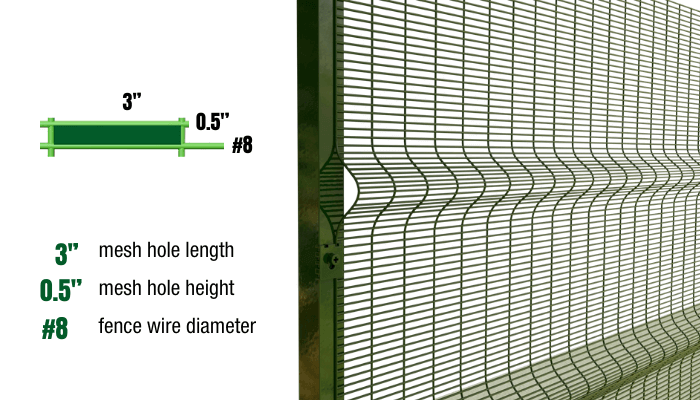
When the requirement is maximum security—think prisons, data centers, power plants, or military sites—there is really only one option: the 358 Mesh. The name comes from its imperial measurements: 3 inches by 0.5 inches, using 8-gauge wire.
The genius of this design lies in the aperture size. The 12.7mm opening is too narrow for a human finger to enter, making it virtually impossible to climb. Simultaneously, the small gap prevents the jaws of standard bolt cutters from gaining a purchase on the wire. It is a passive defense system that frustrates intrusion attempts simply by its geometry.
However, sourcing 358 mesh requires strict attention to weld quality. Because the wires are so close together, the welding machine must be incredibly precise. If the current is too low, you get “cold welds” that snap under impact. If you are importing this for critical infrastructure, you must insist that the weld shear strength meets EN 10223-4 standards. This ensures that the panel acts as a single, cohesive sheet of steel rather than a collection of loose wires.
Industrial Boundaries: Balancing Cost & Rigidity with 3D V-Mesh Panels
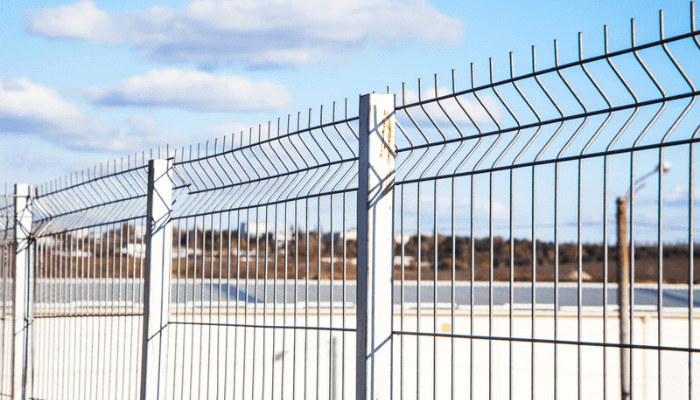
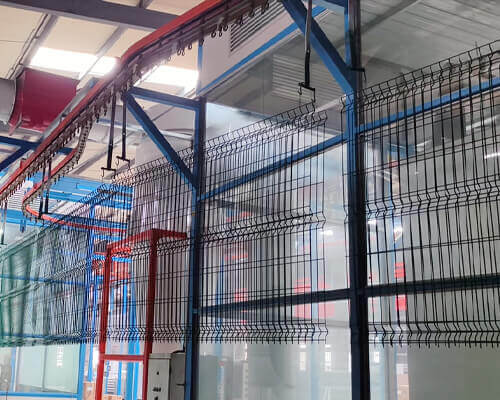
For industrial parks, solar farms, and large commercial boundaries, the 358 mesh is often overkill and over-budget. The solution here is the 3D V-Mesh Panel. You will recognize this fence by the V-shaped “folds” or beams pressed horizontally across the panel.
These folds are not decorative. They are structural engineering in action. By adding these corrugated profiles, we increase the transverse stiffness of the panel. This allows us to use a slightly lighter wire—typically 4.0mm or 4.5mm—while achieving the same rigidity as a flat panel made of much heavier steel. This reduction in steel mass translates directly to a lower cost per meter, making it the volume leader for projects where perimeter delineation is the priority. When sourcing this, check the “V” counts; a higher fence requires more folds (usually 3 or 4) to maintain stability.
Public Safety: The “No-Sharp-Edge” Advantage of BRC Roll Top Fence
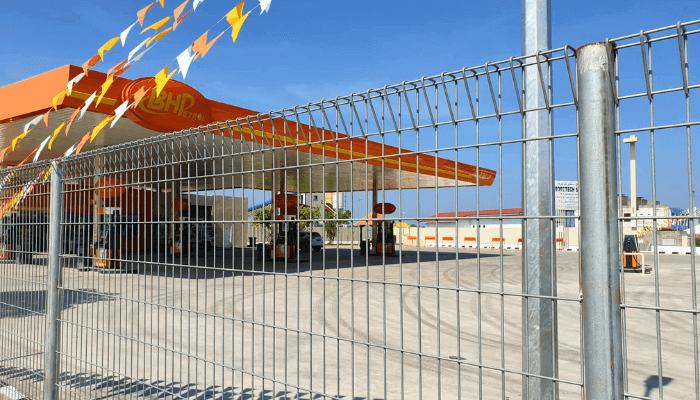
In public spaces like schools, playgrounds, and parks, the priority shifts from keeping people out to keeping people safe. Standard wire fences have “cut” edges at the top—raw wire ends that can be sharp and dangerous to curious children or pedestrians.
The BRC (Roll Top) Fence solves this liability issue. Instead of raw edges, the top and bottom of the panel are rolled into a triangular beam loop. There are no sharp points anywhere on the panel. This rolled profile also acts as a stiffener, eliminating the need for the V-folds used in industrial fencing. It provides a cleaner, friendlier aesthetic that architects prefer for residential and municipal projects. Importing BRC requires a manufacturer with precise bending machinery, as the roll must be perfectly circular to ensure a consistent look across a long fence line.
Installation Speed: Why “Peach Posts” Save 20% on Labor Costs
The cost of the fence is only half the equation; the other half is the cost of installation. In Western markets where labor rates are high, the time spent screwing clamps and brackets onto posts can destroy a project’s budget.
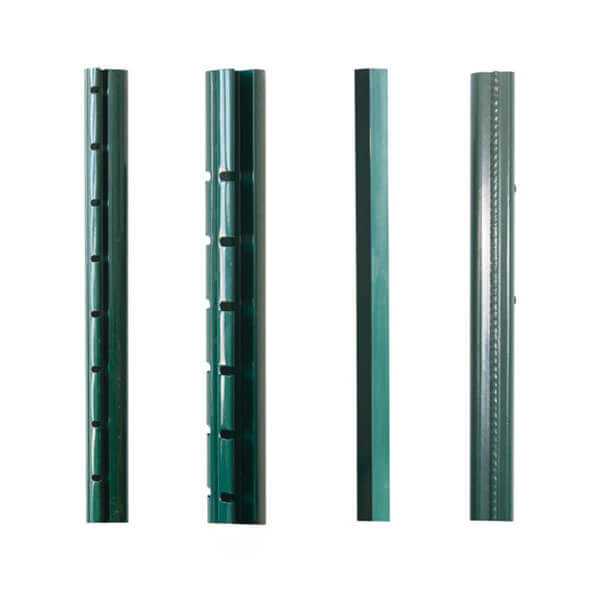
This is where the Peach Post system shines. The post is formed into a shape resembling a peach, with a vertical groove running down the side. The mesh panels simply hook into this groove. There are no bolts, no nuts, and no clamps to lose in the mud. An experienced crew can install a Peach Post system roughly three times faster than a traditional square post system.
However, there is a catch: Precision. With a traditional clamp system, you have some “wiggle room” if the post spacing isn’t perfect. With Peach Posts, the fit is exact. If the manufacturer’s dimensional tolerance is off, or if the posts are bent during shipping, the panels won’t lock in. This is why buying Peach Posts from a factory with automated cold-rolling lines and strict QC is non-negotiable.
Step 2: Technical Specs & Quality Control (The “Tech Pack”)
You have selected your system. Now comes the most critical phase of importing: defining the technical specification, or the “Tech Pack.” This is where the battle for quality is won or lost. Many buyers assume that “Standard Quality” means the same thing in China as it does in their home country. It does not. You must explicitly define every parameter.
Wire Diameter: The “Nominal” vs. “Actual” Tolerance Scam Explained
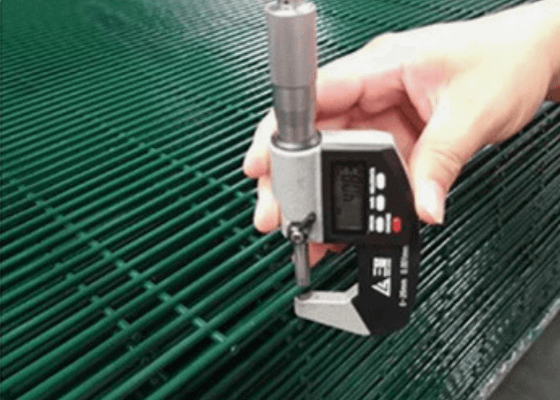
In the domestic Chinese market, there is a concept known as “negative tolerance.” If a customer asks for 4.0mm wire, the factory might supply 3.8mm or even 3.7mm wire. To the naked eye, the difference is invisible. But across a container load, that 0.2mm difference represents tons of steel that you paid for but didn’t receive.
This “lightweighting” reduces the strength of your fence and its service life. When you write your purchase order, you must specify the actual wire diameter and the allowable tolerance. A professional specification reads: “Wire Diameter: 4.00mm ±0.05mm.” By locking in this tolerance, you send a signal to the factory that you will be measuring the product with a micrometer upon arrival. At Shengsen, we quote based on actual weight and dimensions because we believe transparency builds long-term partnerships.
Rust Prevention: Pre-Galvanized vs. Hot-Dip Galvanized (HDG) Life Expectancy
If there is one section of this guide you memorize, let it be this one. The coating method determines whether your fence lasts 2 years or 20 years. There are two main ways to galvanize a welded wire fence, and confusing them is a fatal error.
The first is Pre-Galvanized. In this process, the factory buys wire that has already been galvanized and then welds it into a mesh. The problem? The intense heat of welding burns the zinc off at the intersection points (the cross welds). Even if the factory sprays a little zinc paint over the welds later, these spots remain vulnerable. Rust will invariably start at the welds within a year or two.
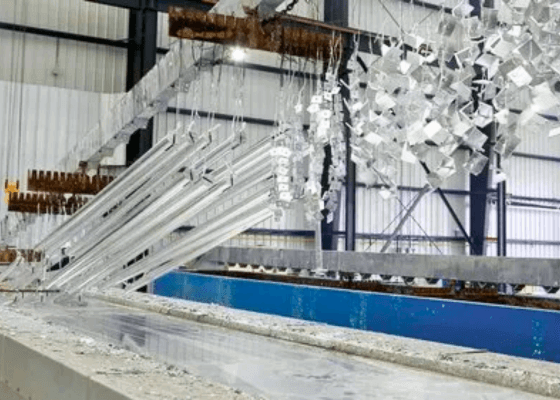
The superior method is Hot-Dip Galvanized (HDG) After Welding. Here, we weld the fence using black steel wire first. Then, we take the entire finished panel and dip it into a bath of molten zinc. This coats every millimeter of the fence—including the welds—in a thick, protective layer of zinc (typically 300 to 500 g/m²). This creates a metallurgical bond that provides decades of rust resistance. For any project in a coastal area or requiring a long warranty, you must specify HDG After Welding.
Powder Coating: Why Polyester (TGIC) Outlasts Standard PVC in Sun
If you want a colored fence, you are adding a polymer layer over the steel. The cheapest option is “Dip Coating” using standard PVC. This creates a thick plastic skin. While it looks good initially, standard PVC has poor resistance to Ultraviolet (UV) light. Over a few years of exposure to the sun, it will fade, crack, and eventually peel off like a sunburned skin.
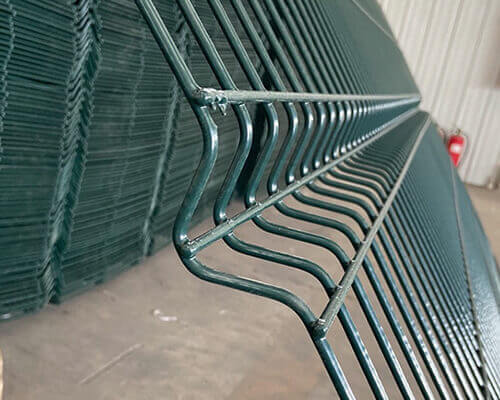
The professional standard is Electrostatic Polyester Powder Coating, specifically using TGIC (Triglycidyl Isocyanurate) hardeners. This powder is sprayed onto the fence and baked in an oven, curing it into a hard, durable finish that bonds chemically to the steel. TGIC polyester is engineered to withstand UV radiation without chalking or fading.
Always ask your supplier which powder brand they use (e.g., AkzoNobel) and require a cross-hatch adhesion test to ensure the coating won’t flake off.
The Weld Test: Verifying Shear Strength Before You Pay the Balance
A security fence is only as strong as its weakest connection. If the welds are brittle, a determined intruder can kick through the panel or pry the wires apart. Before you authorize the final payment for your order, you should require a Weld Shear Strength Test.
This is a destructive test where a sample of the mesh is subjected to force until the weld breaks. International standards dictate that the weld must withstand a force equal to at least 50% to 75% of the breaking load of the wire itself.
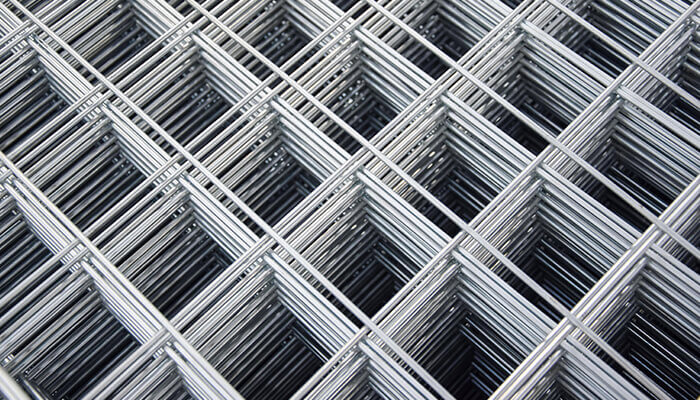
In other words, the wire should snap before the weld gives way. If your supplier cannot provide a lab report proving their welds meet this threshold, you are buying a visual deterrent, not a physical barrier.
Step 3: Vetting Suppliers: Manufacturer vs. Trader
With your specifications locked down, the question becomes: who should you trust to build it? In China, the B2B platforms are populated by thousands of entities claiming to be factories. In reality, many are trading companies. While traders have their place, for large-scale fencing imports, dealing directly with the manufacturer is safer and more cost-effective.
The “Video Audit”: Inspecting Welding Machines & Stockpiles Remotely
How do you tell a real factory from a trader without flying to China? The “Video Audit” is your most powerful tool. Don’t settle for pre-recorded tour videos which can be faked or borrowed. Ask for a live video call.
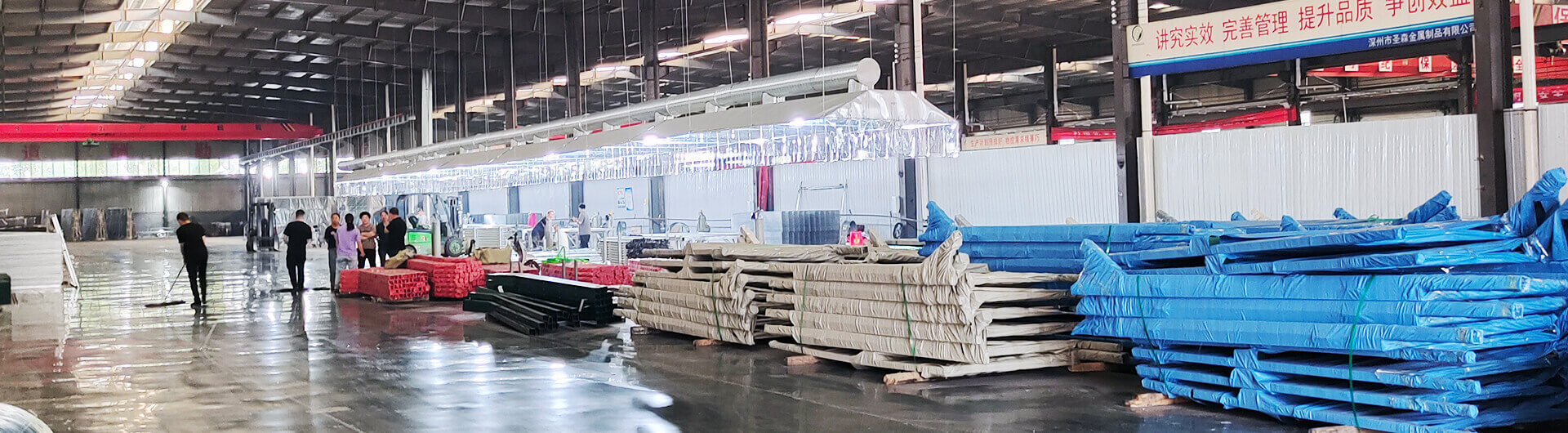
During the call, ask the sales representative to walk to the Wire Drawing Area. A true manufacturer starts with raw steel rods and draws them down to the correct wire thickness in-house.
This gives them control over the tensile strength and material quality. A trading company usually buys pre-cut wire or finished panels. If they can’t show you the wire drawing machines or the galvanizing tank, they are likely outsourcing the production. Seeing the raw material stockpile is the best proof of a factory’s legitimacy.
Production Capacity: Does the Factory Have 100,000m² for Large Orders?
Fencing projects are almost always time-sensitive. A delay in fencing can prevent a construction site from being secured, holding up the entire project. You need to verify that your supplier has the throughput to handle your volume.
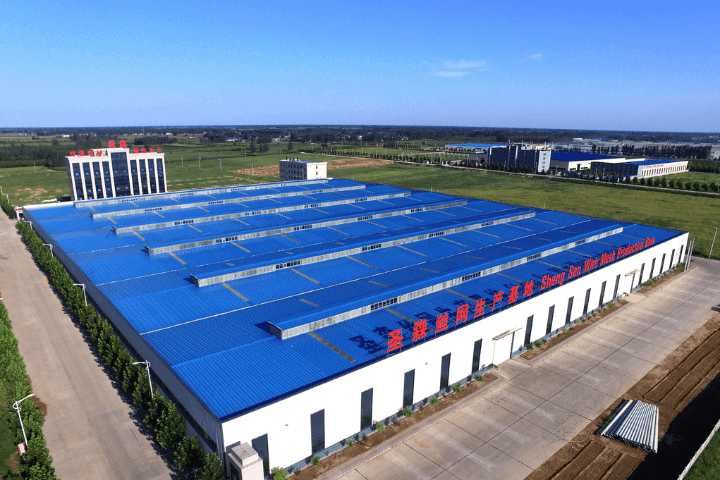
A small workshop with one or two welding machines might produce excellent quality, but if one machine breaks down, your order halts. For large orders, you need a partner with multiple automated welding lines and a stated Daily Output Capacity that exceeds your needs. Ask for a “Process Map” that details their production flow. Can they weld, galvanize, and powder coat simultaneously? Shengsen, for example, maintains massive capacity to ensure that a surge in orders doesn’t result in extended lead times for our clients.
Certifications: Why ISO 9001 & TUV Matter for Government Bids
If you are bidding on government infrastructure or large corporate projects, the paperwork is often as scrutinized as the steel. Your client will likely demand proof of Quality Management Systems.
This is where ISO 9001 certification becomes critical. It proves that the factory has a documented system for quality control, error tracking, and management. Furthermore, look for third-party verifications from respected bodies like TUV or SGS.
These audits confirm that the machinery, staff, and factory size claimed by the supplier actually exist. These documents are often mandatory for the “submittal package” you present to your end client.
Step 4: Shipping, Customs & Duties (The “Safe Arrival” Plan)
The manufacturing is finished. Your fence is sitting on pallets. Now comes the final, and often most complex, hurdle: getting it to your door legally and intact. Logistics for wire mesh is a game of volume and weight management.
HS Code Strategy: Classifying Wire Mesh (7314) Correctly to Avoid Penalties
Customs clearance relies on the Harmonized System (HS) code. For wire fencing, the general heading is 7314 (Cloth, grill, netting and fencing of iron or steel wire). However, the sub-headings matter immensely.
For example, chain link usually falls under 7314.41 (Galvanized) or 7314.42 (Coated with plastics). Welded mesh has different codes. Why does this matter? Because trade tariffs and anti-dumping duties are often targeted at very specific 8-digit or 10-digit codes.
A misclassification can lead to your container being held at the port, or worse, a surprise bill for retroactive duties years later. Work with your customs broker and your supplier to verify the exact code before the commercial invoice is printed.
Smart Loading: How to Maximize Volume in a 40ft Container
Shipping “air” is the fastest way to kill your profit margin. Because fencing panels are rigid, they can consume a lot of container volume without hitting the weight limit. To solve this, we use a technique called Nesting.
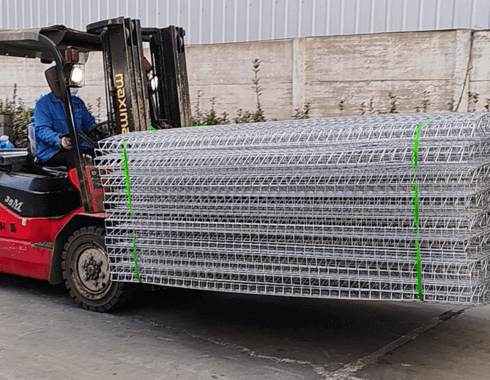
For 3D V-Mesh panels, we flip every second panel so that the “V” folds interlock with each other, significantly reducing the stack height. For Peach Posts, we interleave them to create a dense block. Your goal is to maximize the container.
A 40HQ container should ideally hold 25 to 28 tons of steel fencing. If your packing list shows only 15 tons, you are paying the same ocean freight for half the product. Always optimize your order quantity to fill the container completely.
Packaging: Steel Pallets vs. Bulk Loading (Forklift vs. Manual Unload)
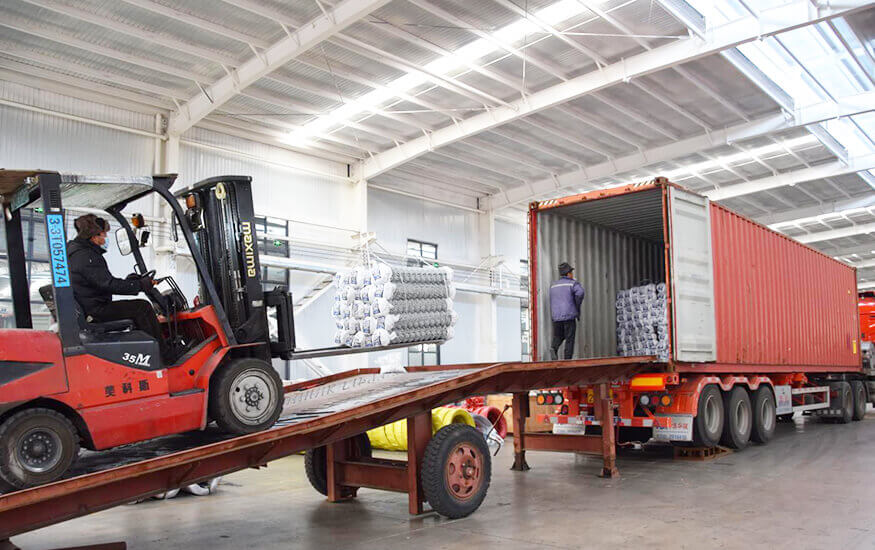
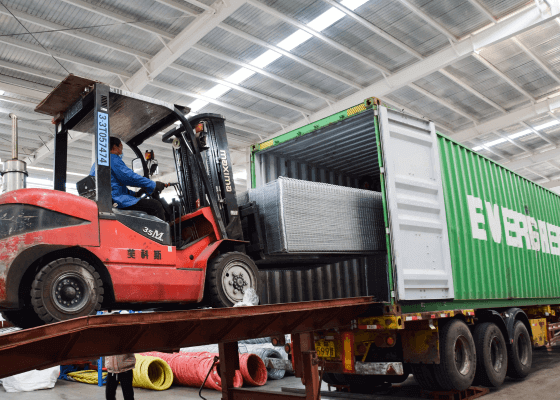
You also face a trade-off between shipping density and unloading ease. Bulk Loading (loose loading) allows us to fit roughly 10-20% more product into the container because there are no pallets taking up space. However, when this container arrives, you cannot use a forklift. You will need a team of laborers to hand-bomb thousands of panels, which is slow, expensive, and dangerous.
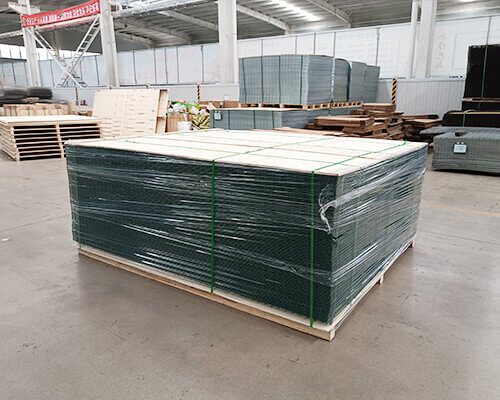
For most B2B buyers, we strongly recommend Pallet packaging. While you sacrifice a small amount of shipping volume, you gain the ability to unload the entire container in 30 minutes with a forklift. The steel pallet also protects the bottom panels from being crushed during the weeks of ocean transit.
Moisture Control: Using VCI Film to Prevent “White Rust” at Sea
Finally, we must address the chemistry of the ocean voyage. A shipping container is a humid, sweaty environment. As it moves through different climate zones, condensation (“container rain”) forms on the roof and drips onto your cargo.
Zinc is highly reactive to this moisture. If wet zinc is deprived of airflow, it reacts to form Zinc Hydroxide—a white, powdery corrosion known as “White Rust” or “Wet Storage Stain.” While it doesn’t structurally destroy the fence immediately, it looks terrible and suggests a defect to your client.
To prevent this, demand that your supplier wraps the pallets in VCI (Volatile Corrosion Inhibitor) stretch film and places desiccant bags in the container. This simple step ensures your fence arrives shining and silver, not covered in white powder.
Conclusion: 3 Steps to Start Your Next Order
Importing wire mesh fencing doesn’t have to be a gamble. By stripping away the unknowns and focusing on the technical data, you can turn procurement into a competitive advantage.
- Define the Life Expectancy: Decide early if your project needs the 5-year economy of pre-galvanized wire or the 20-year resilience of Hot Dip Galvanized.
- Lock the Specs: Don’t leave room for interpretation. Write the wire tolerance, the steel grade (Q235), and the weld strength directly into your contract.
- Optimize Logistics: Don’t ship half-empty boxes. Plan your order volume to hit that 25-ton “sweet spot” of a full container load.
At Shengsen Wire Mesh, we understand that we aren’t just selling you a product; we are helping you build a reputation. When you are ready to source high-grade fencing with factory-direct transparency, we are here to be your partner.
FAQ: Common Questions from Wire Mesh Importers
H3: What is the minimum zinc coating for a 10-year warranty?
A warranty is only as good as the zinc protecting the steel. For a standard, non-coastal environment, a 10-year lifespan generally requires a minimum of 275g/m² of zinc (Hot Dip Galvanized).
Alternatively, a high-quality Class 2b PVC or Powder coating over a standard galvanized core can also achieve this, provided the adhesion is perfect.
How many kilometers of V-Mesh fit in one container?
This is the most common logistics question we get. While it depends on the specific height of the fence (e.g., 1.8m vs 2.4m), a standard 40HQ container typically holds between 3.5km and 4.5km of fencing panels. This includes the panels nested efficiently on pallets.
Can I customize mesh aperture sizes for special projects?
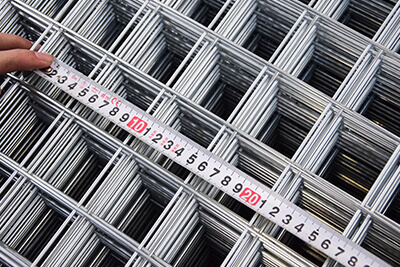
Yes, but with caveats. Since we are the manufacturer, we can re-tool our welding machines to produce any aperture you need (for example, a 50x200mm opening instead of the standard 50x100mm).
However, re-tooling takes time and setup cost. Therefore, custom aperture sizes are usually only viable for orders exceeding 1,000 panels.
What is the lead time for 5km of powder-coated fencing?
Speed is often a priority. For a standard 5km order (which is roughly 2 to 3 containers), our production cycle is typically 20 to 25 days. This allows time for wire drawing, welding, galvanizing, powder coating, and curing.
You should then factor in the ocean transit time, which varies by destination (e.g., 14 days to US West Coast, 30+ days to Europe).
Shengsen Metal
Shengsen is a wire mesh specialist. With 20+ years of experience in this industry, Shengsen developed solutions for all your wire mesh needs.

Recent Posts
Save More Wholesale From China Factory
Find out if you're buying high with with Shengsen Metal Solution.
You Might Be Interested In
What Are All the Parts to A Chain Link Fence?
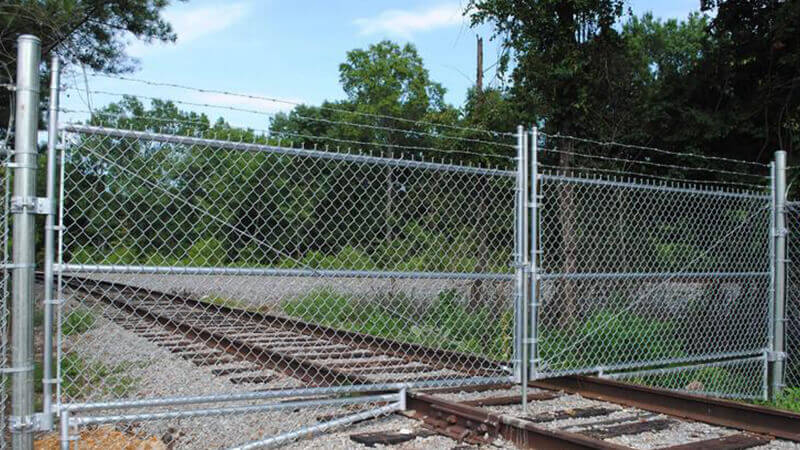
Chain Link Fence Parts Here are the essential components of a chain link fence: Chain link fence mesh panel Posts Top rails Protection wire arm Barbed ...
Read More

What is Razor Wire? A Complete Guide to High-Security Perimeter Fencing
Razor wire is a high-security fencing solution made of sharp-edged steel tape wrapped around a strong wire core. It’s designed to physically stop intruders and psychologically ...
Read More
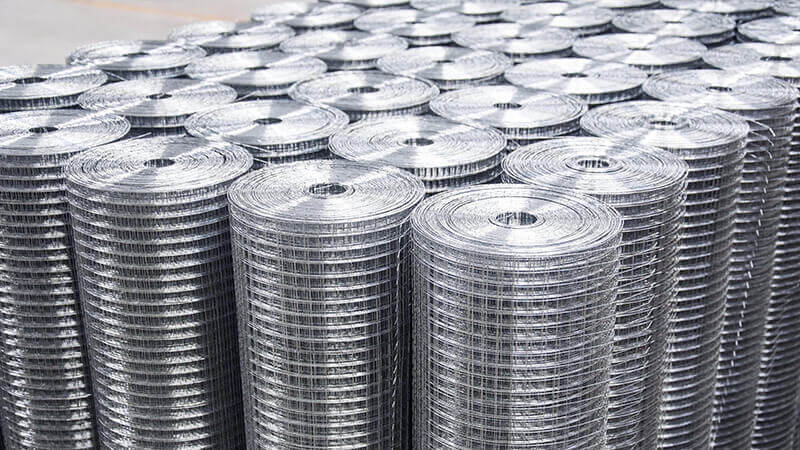
Welded Wire Mesh Review (2024): Versatile Wire Mesh Products For Your Market
What is Welded Wire Mesh? Welded wire mesh is a type of metal mesh made by welding the intersection points of metal wires together. It is ...
Read More

Top 10 Welded Wire Mesh Manufacturers in China: 2024 Updated
When it comes to selecting a welded wire mesh manufacturer, it’s not just about finding any company—it’s about finding the right one that can deliver on quality, efficiency, and timely delivery.
Read More
Get An Accurate Quote Today!
We help you avoid the pitfalls to deliver the quality and value your wire mesh need, on-time and on-budget.
